Ownership
Audit, interaction system, prototype, and front-end design.
Five demos moved. The decisions did not. I rebuilt the playground around the moment a developer asks whether an API deserves to enter the stack.
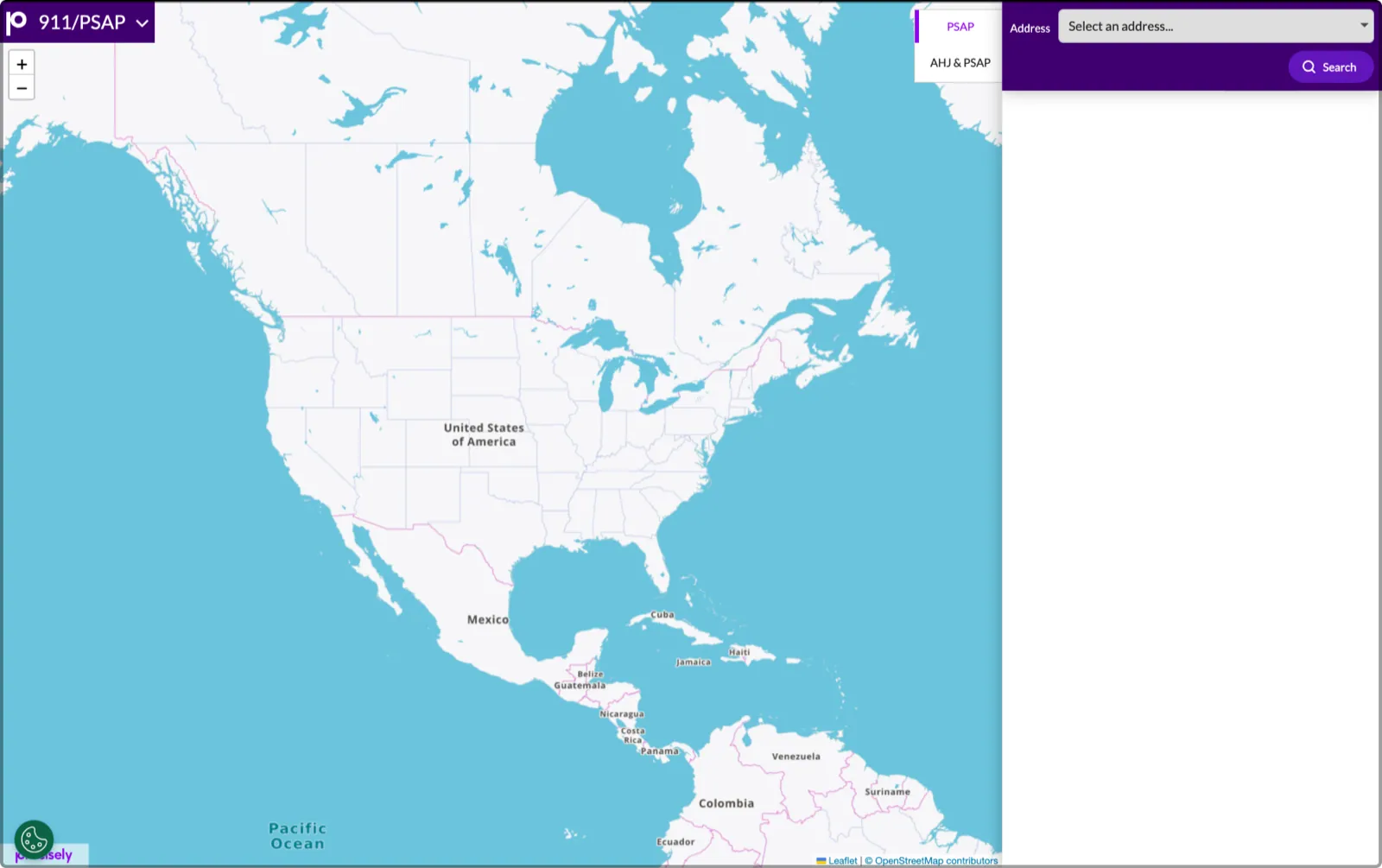
Emergency Info API (Old Portal)
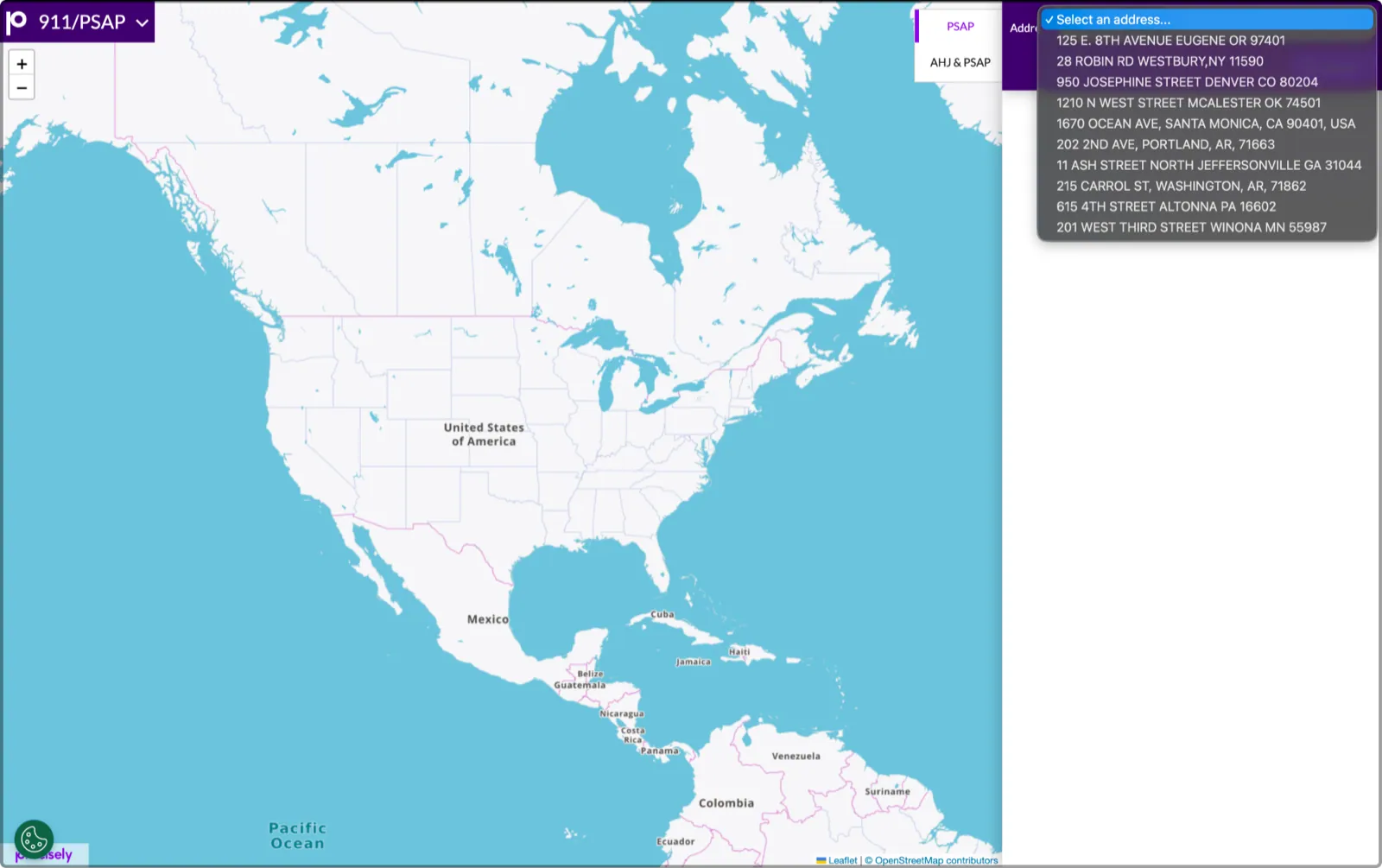
Fixed inputs, disabled fields
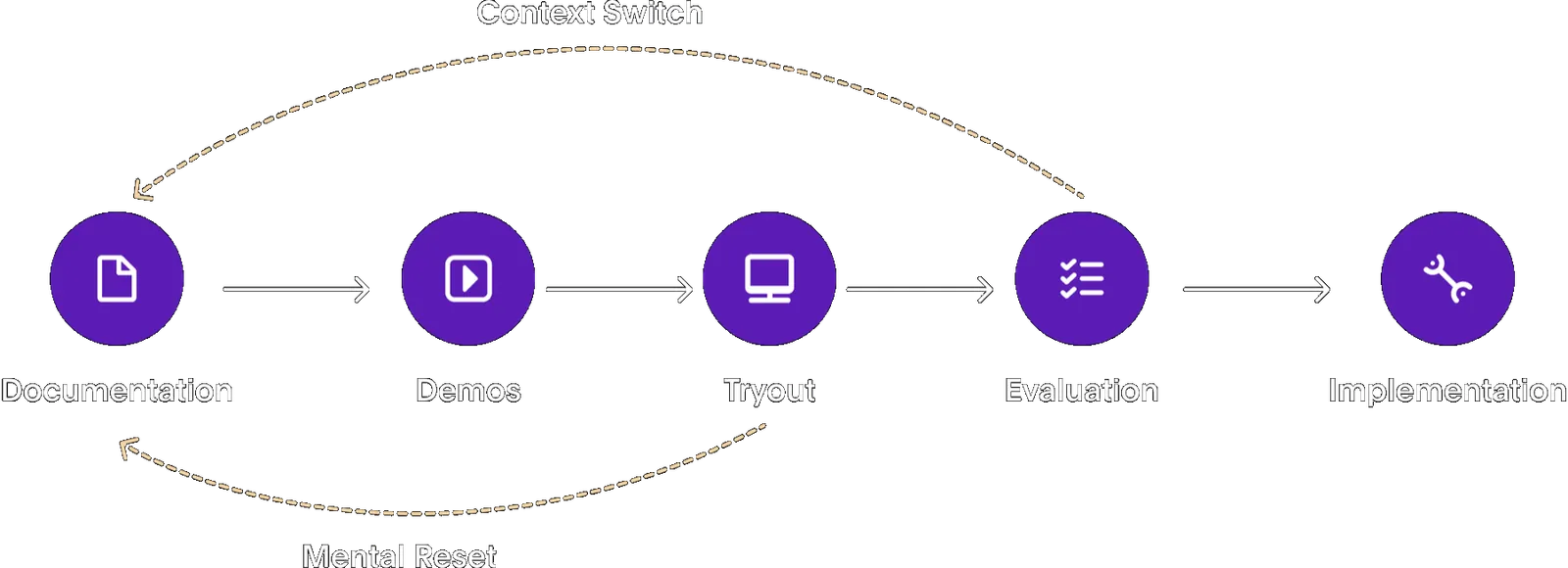
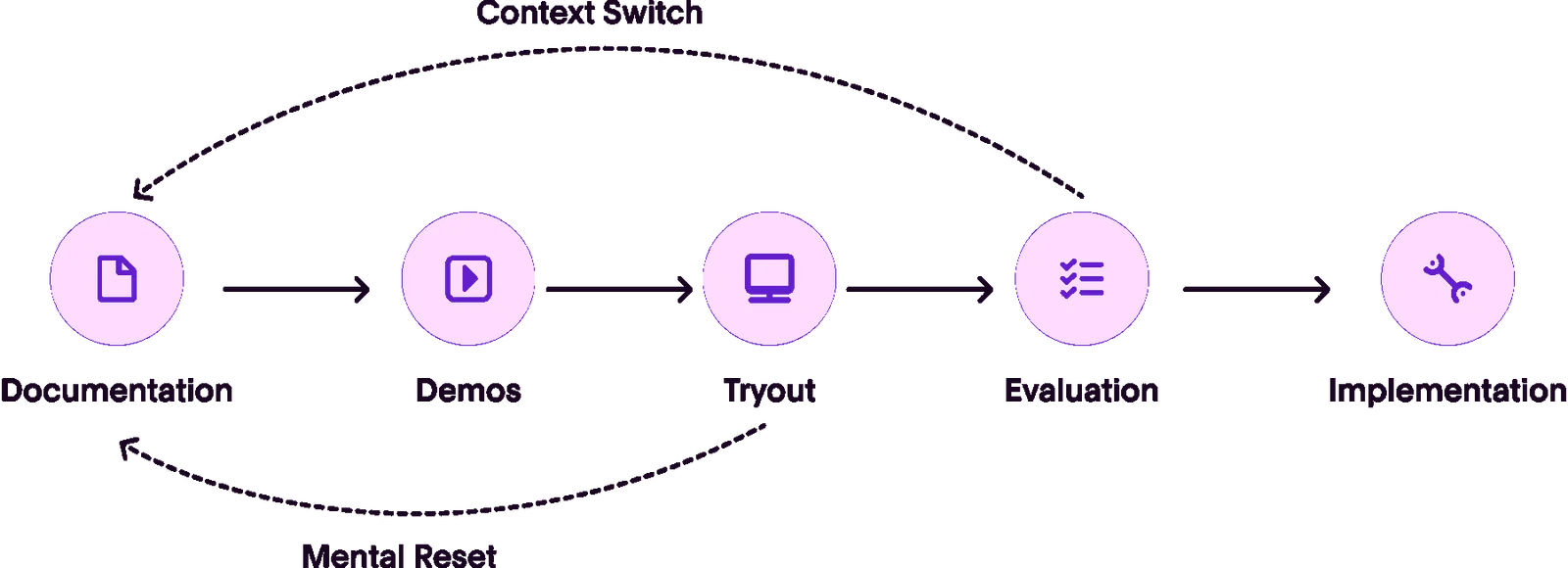
60-second brief · Decision record
Developers could see examples, but they could not test their own data or judge fit inside the portal.
Five demos looked like five opportunities. The audit revealed one fragmented evaluation problem.
Audit, interaction system, prototype, and front-end design.
Three months, five different APIs, one cloud migration.
One configurable workspace for real inputs and responses.
Path reduction, N=8 evaluation, and production launch.
Inputs were fixed. Fields were locked. One API call took eight steps across docs, an external tool, and a separate result.
Emergency Info API (Old Portal)
Fixed inputs, disabled fields
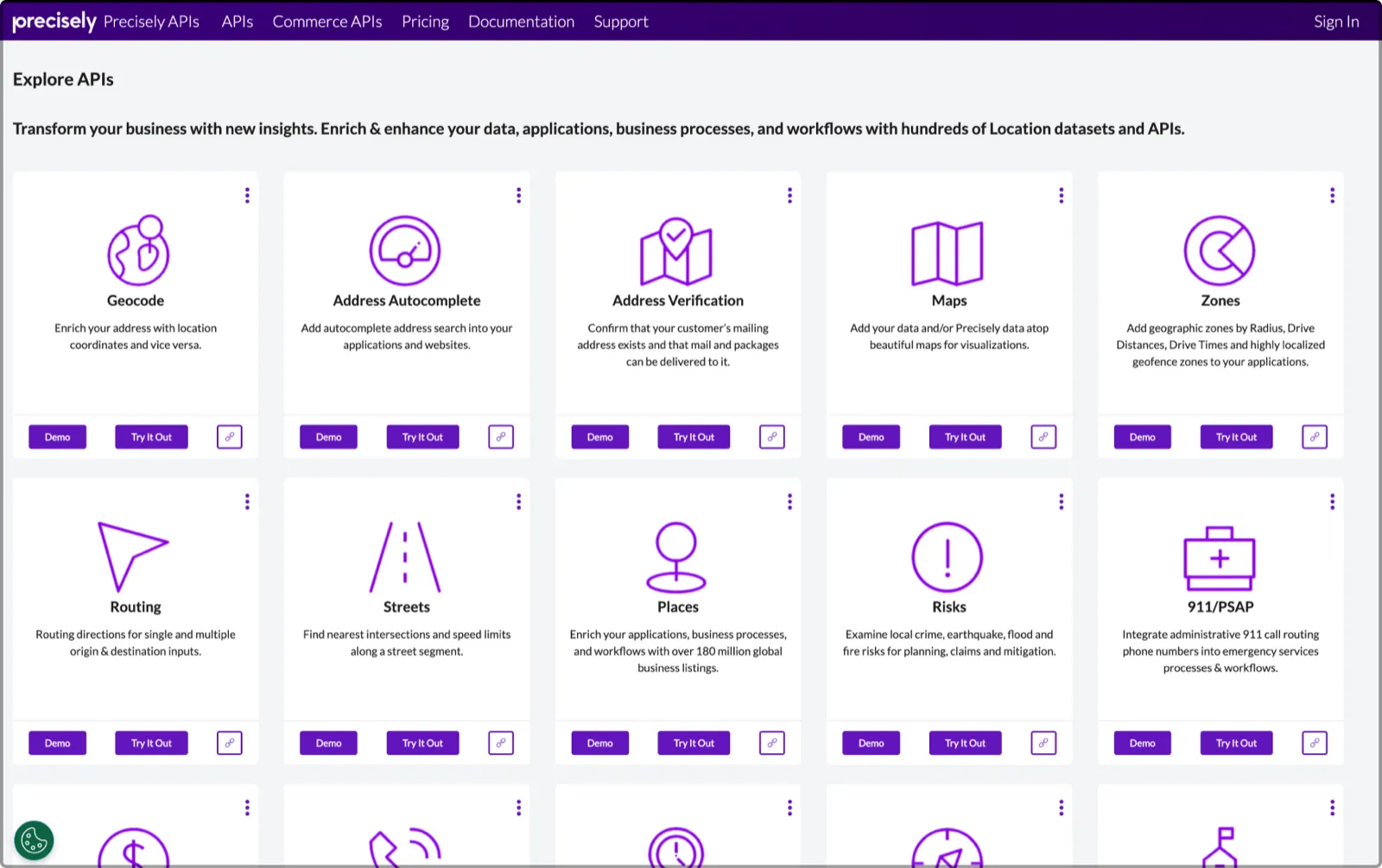
Old portal (https://developer.precisely.com/apis)
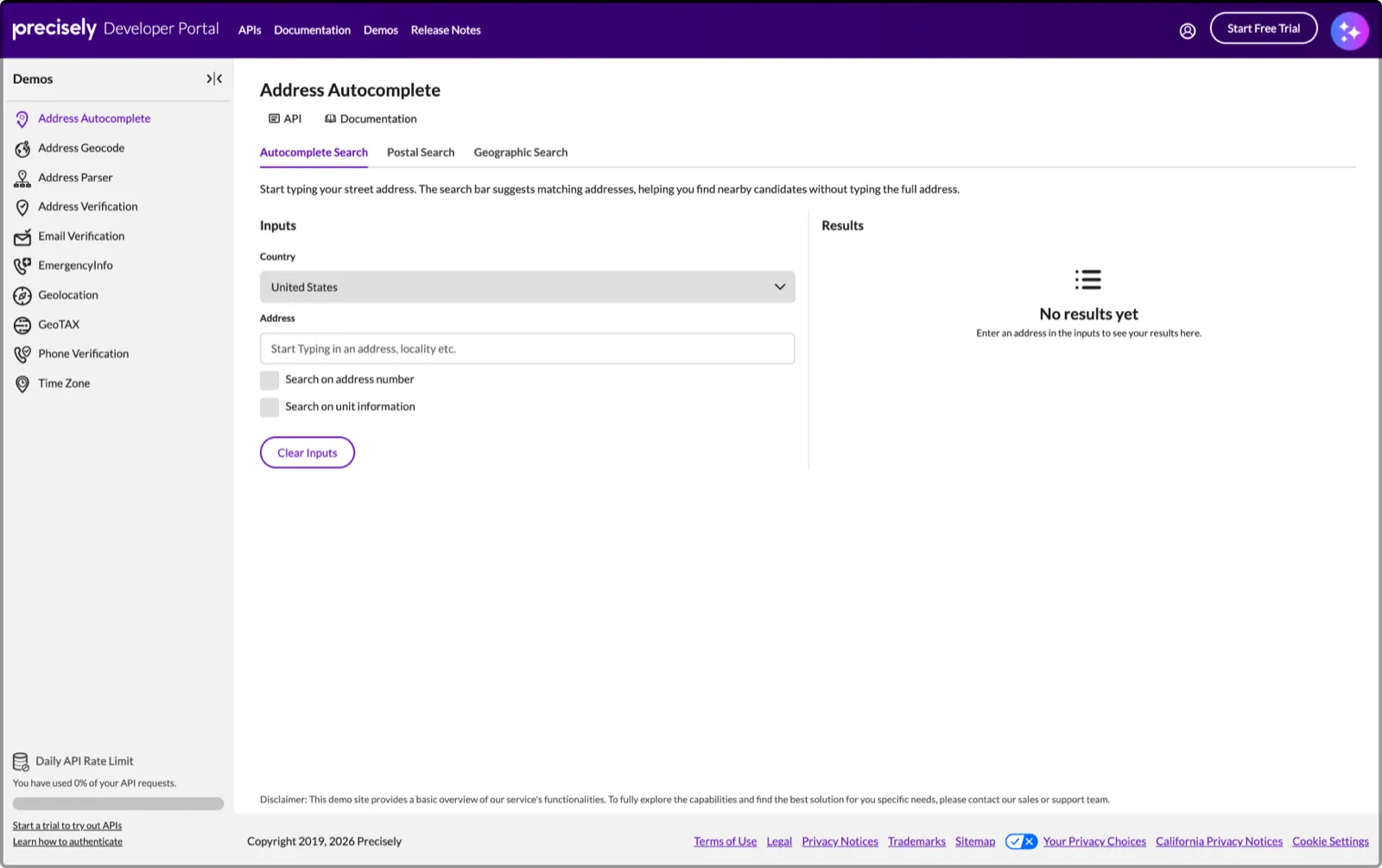
Cloud portal (https://developer.cloud.precisely.com/)
One tryout pattern could now bend to the needs of every API without forcing developers to relearn the experience.
The unit of work changed.
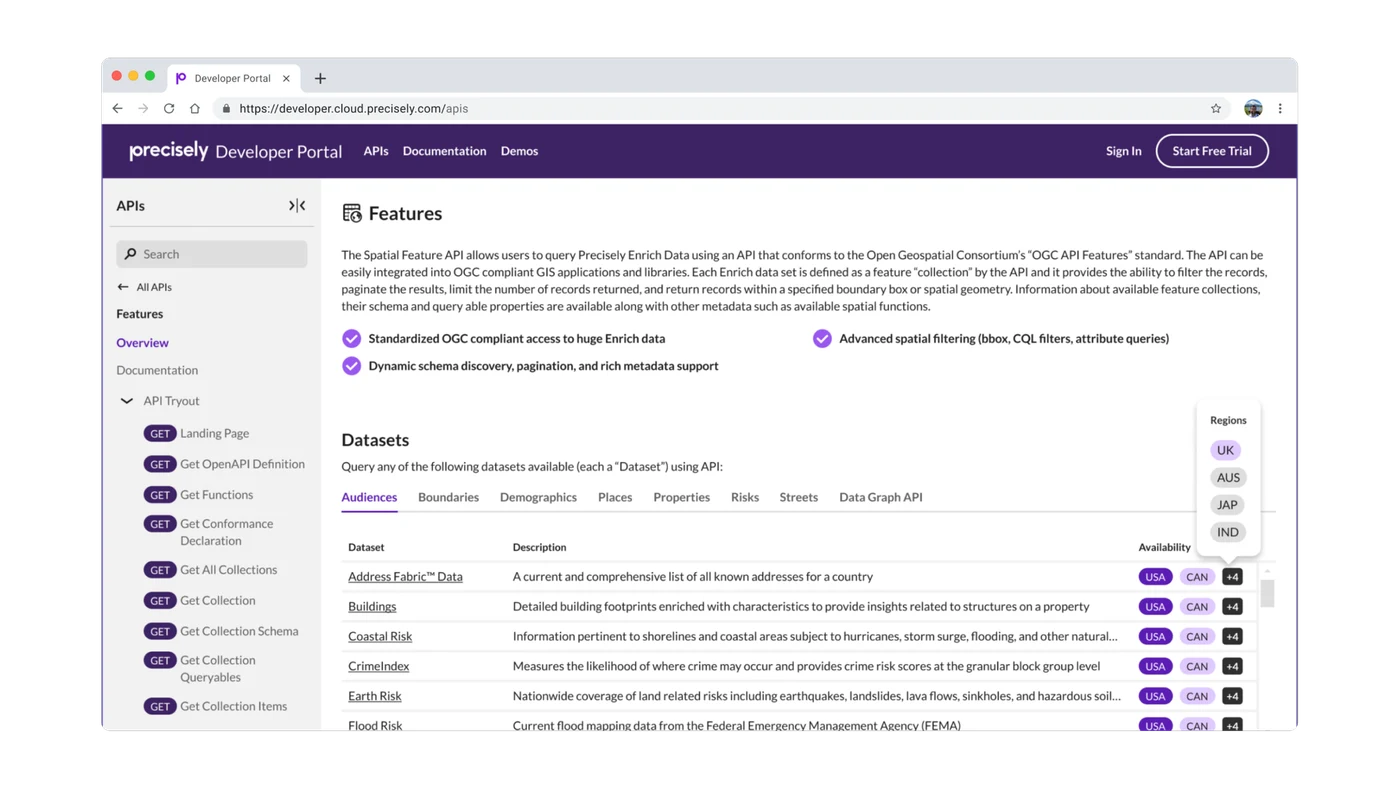
No API could fully custom-design its own demo.
One page logic carried all five shipped demos.
Developers could judge coverage first, change a real request, and witness the consequence without leaving the portal.
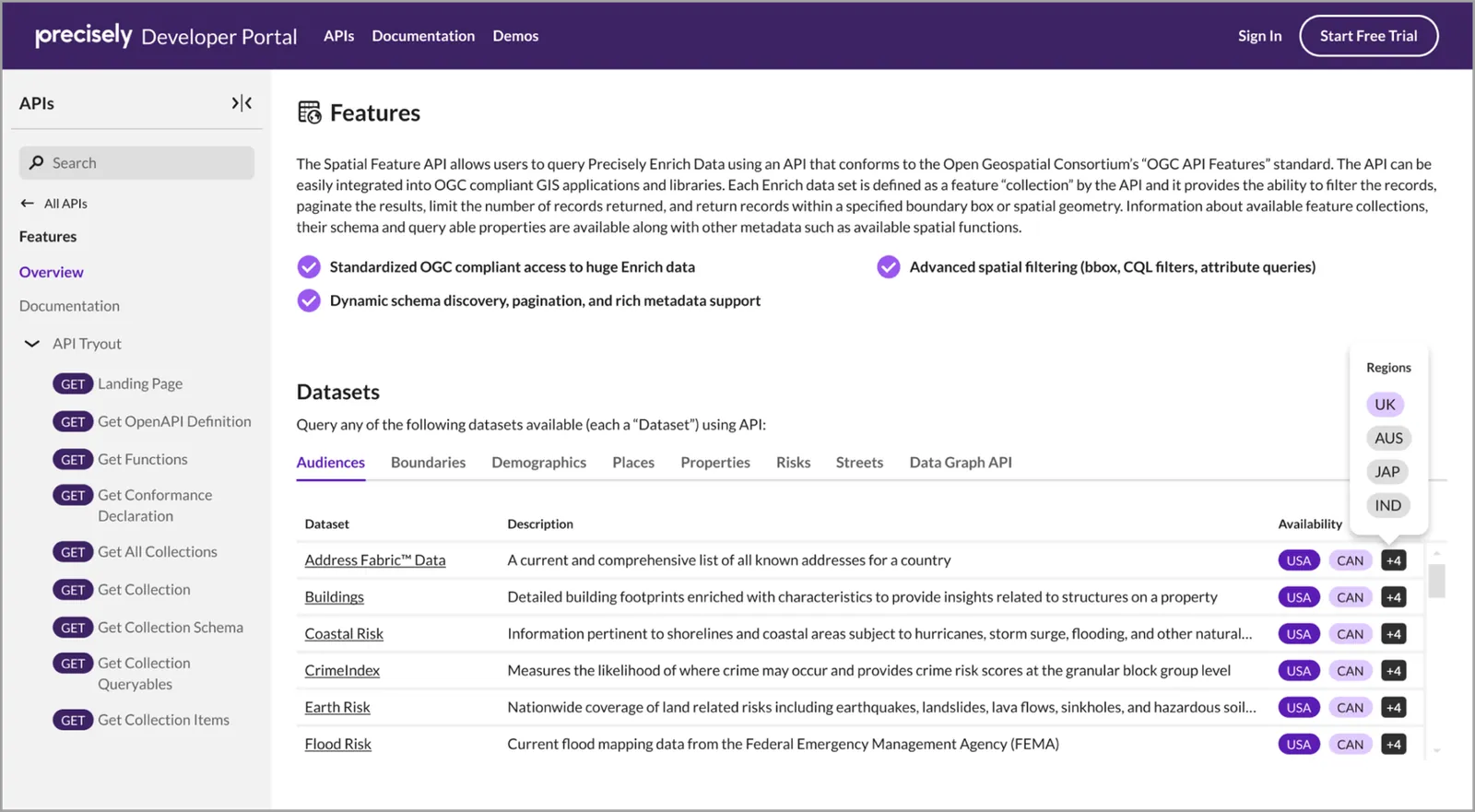
Real inputs exposed real edge cases during evaluation.
The response now reflects the developer's own address or coordinates.
I concentrated on evaluation inside each API and left the names and grouping that led people there unchanged.
The tryout direction was approved. API discovery remains a named boundary of the work rather than an implied success.
The design optimized the second decision before validating the first. A developer could move efficiently in the wrong direction.
The workspace helped once a developer reached an API page. Developers who did not already understand names such as Reverse Geocode or GeoTAX could still choose the wrong starting point.
The selected API became easier to test with real inputs and outputs.
The design optimized the second decision before validating the first. A developer could move efficiently in the wrong direction.
If first-click testing showed developers choosing the wrong API for a task, catalog language and grouping would take priority over workspace polish.
A text-only tree test before interface work would have delayed the visible prototype but exposed whether the information architecture matched developer language.
Time Zone and Wi-Fi needed a light map. GeoTAX carried denser setup. The same pattern had to survive both without forking.
Supporting GeoTAX without burdening simpler demos required progressive disclosure.
GeoTAX fit the same workspace without a separate interaction model.
Choose an API, enter real data, and judge the result without leaving the portal.
My interaction result sits beside wider program validation and delivery evidence.
Removed spec download, external-tool import, and authentication setup.
Developers, product managers, and sales engineers tested the wider Tryout program.
API Tryout replaced the earlier proof of concept in February 2026.
A later delivery team extended the wider portal pattern.
Evidence noteEvidence combines my five-demo design scope with wider program results. Read the full retrospective
View the live Developer PortalI used APIs covered as the primary proof that the pattern worked.
The pattern scaled. The case study no longer presents coverage counts as evidence of developer impact.
The metric proved what I built, not whether one developer reached a confident decision faster.
The new tryout pattern covered five APIs and mapped three more, but the user's job was deciding whether an API fit, not watching the team scale a component.
Coverage showed the system could handle different inputs and response types.
The metric proved what I built, not whether one developer reached a confident decision faster.
If a first-time developer could not reach and explain a trustworthy result faster than on the old portal, coverage would not count as success.
Defining the activation signal before building would produce a smaller headline, but one connected to the developer's actual job.
I led the audit, shared tryout pattern, prototype, and front-end design across five location demos.
Engineering led production delivery; product led the API roadmap. I also contributed reusable components to the Precisely Design System.
The portal went on to win two 2026 Global AI Awards, in Agentic AI and Conversational AI. The award recognizes Precisely's product; several designers, including me, contributed. See the winners list (opens in new tab).
The hardest call wasn't a screen. It was proving the idea on real data before anyone asked me to.
A static flow could not expose the states that make or break the experience, so I built a working prototype in Figma Make and GitHub Copilot, wired to live APIs. The direction was approved on real responses, not mockups.
This moved the decision from presentation preference to working product behavior before engineering delivery.
In hindsight
The platform is live, validated, and reusable. These are the two measurement layers I would add next.
The program completed usability validation with eight product managers, developers, and sales engineers, then moved API Tryout into production.
Add a durable activation signal: the share of developers who reach a trusted result and return to evaluate another API.
The designed path reduced validation from eight setup steps to three in-portal steps and kept inputs, request, map, and response in one workspace.
Instrument time to a first successful request. Watch new developers reach it, then cut or reorder whatever step doesn't help them get there.
Five shipped demos. One shared system. Three steps from question to evidence.
Enter the live portal